TB 117-2013 began as a California rule on how upholstery smolders; federal law has since made it the test for every sofa, armchair, pouf and headboard sold in the country. The upholstered pieces Meroni & Colzani ships to American homes carry its label. The tag looks like a care label, but it answers a different question: how the seat behaves when a smoldering ember lands on it.
a smolder test
Older rules asked foam to survive an open flame, which pushed makers to fill cushions with flame retardant chemicals. TB 117-2013 changed the question. It tests the cover and the filling together against a smoldering source, the kind of fire that starts from a cigarette left on an arm. A seat passes when the ember burns out and the smolder does not spread through the cushion.
The change let many makers drop the chemicals. A cover and a filling that resist smoldering by their make pass the test without them.
the tag and the box
The tag is no smaller than 2 inches by 3. The maker fixes it to the piece so it stays, and it should not tear off in normal use. The tag states compliance with TB 117-2013, and then it carries a line with a box: the piece either contains added flame retardant chemicals or contains none. The maker ticks one.
Leave the tag on. It feels like clutter under a cushion, but it tells a future buyer, an insurer or a hotel inspector what the seat is. Resale and contract use both lean on it.
outdoor cushions count too
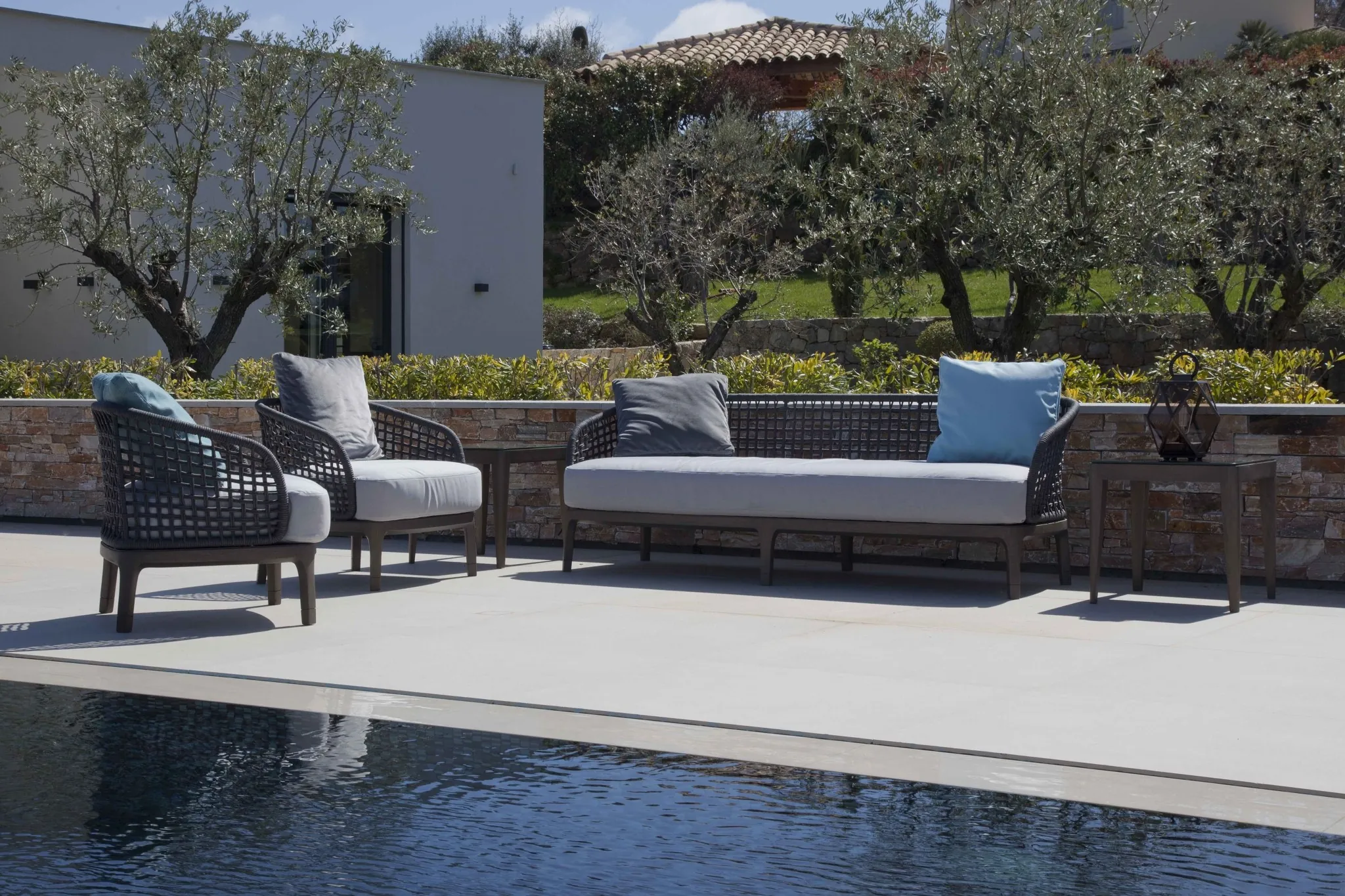
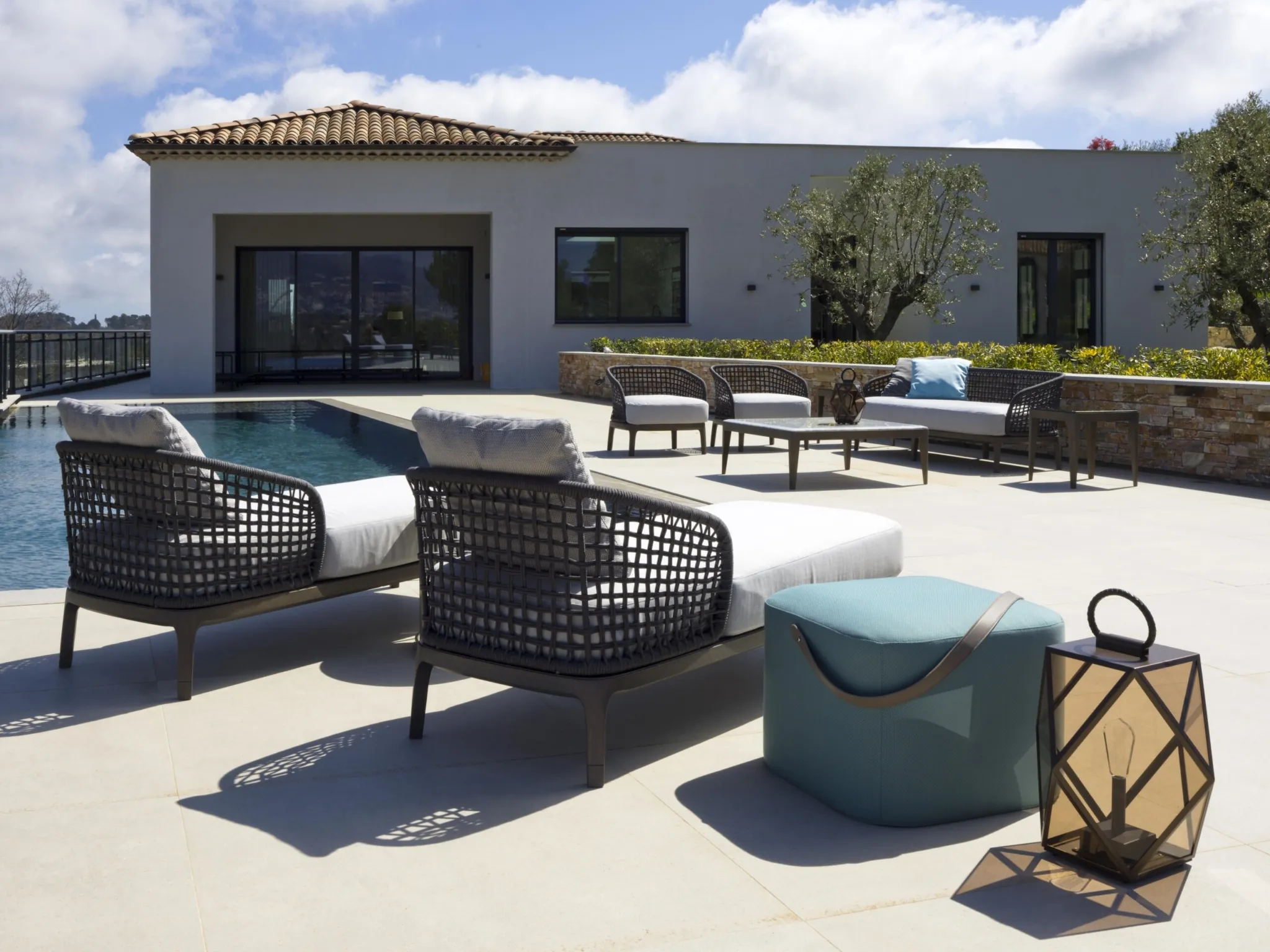
A cushion on a terrace falls under the same rule as one in a living room. The Lungotevere outdoor family shows the point. It takes a woven metal structure on solid iroko legs, and the padding and upholstery come in versions made for outdoor use, in a fabric you pick from the factory's outdoor range. That padding and cover sit under the standard like any indoor sofa would. See the Lungotevere family.
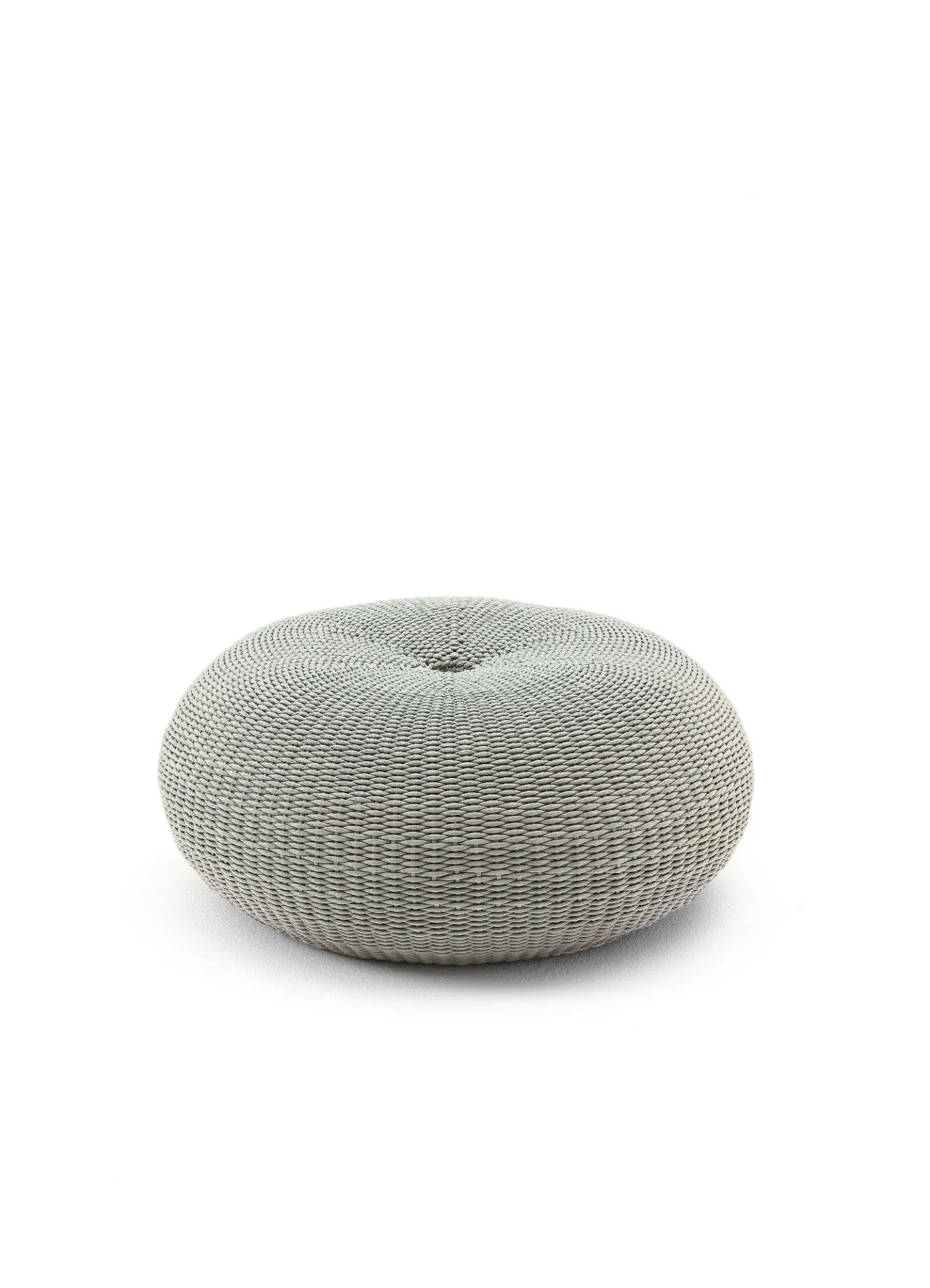
A pouf counts as upholstered furniture as well. Grantorino has an outdoor pouf that you can dress in the color and material you choose, and indoors the family runs to a sofa with a steel structure, pocketed springs one by one and sartorial stitching. Each of them leaves the workshop with a label that matches its cover. See the Grantorino family.
your fabric, their label
A made-to-order piece raises a fair question: if you choose the cover, who tests it? The label applies to the piece as built, with the cover it wears. Pick a fabric from the factory's range and the workshop builds the piece in it and labels it. If you want to supply a fabric of your own, tell us early, because the finished seat still needs to comply, and that can change the filling or the timing.
prop 65, the other tag
California's Proposition 65 is a separate rule. It calls for a notice whenever a piece can expose you to one of its listed chemicals above that chemical's limit. Furniture can trigger it through flame retardants or through formaldehyde in some wood panels. Many sellers print the warning nationwide to avoid shipping two versions. The TB 117-2013 tag and a Prop 65 warning can sit on the same piece and say different things.
what the tag says
-
01 / 04
Complies with TB 117-2013
- What it means
- Cover and filling came through the smolder test
- Why you care
- A dropped cigarette smolders out instead of catching
-
02 / 04
Contains NO added flame retardant chemicals
- What it means
- The maker added none to the filling
- Why you care
- A common choice for homes with children
-
03 / 04
Contains added flame retardant chemicals
- What it means
- The maker added some, and the tag says so
- Why you care
- You can ask which ones
-
04 / 04
Manufacturer and date
- What it means
- Who built it and when
- Why you care
- Useful for warranty and resale
a clean filling, on request
If a clean filling matters to you, say so in your request. We pass the question to Cabiate with the cover you chose and come back with the answer in writing, next to the lead time and the price. Name the Meroni & Colzani pieces and the cloth in the request at the foot of the page.