Iroko outdoor furniture shows up in the Meroni & Colzani catalog at the point where a piece meets the ground. The Cabiate workshops put solid iroko under two outdoor families: the legs of the Lungotevere seating and the base of the Trastevere outdoor table. The rest of each piece, woven metal on one and glass on the other, rides on the wood.
a hardwood for the outside
Iroko is a tropical hardwood, heavy and close in the grain, and furniture makers use it outdoors in the way they use teak. It holds its shape through wet and dry seasons and takes a clean edge from the lathe and the plane. On a terrace it starts a warm golden brown. Left to the weather, it greys.
The Meroni bench works the iroko. That is the joinery half of the house, the one that has turned legs and cut frames for three generations. On the outdoor line the same hands make the legs and bases, and the Colzani bench makes the cushions that sit above them.
lungotevere, iroko under woven metal
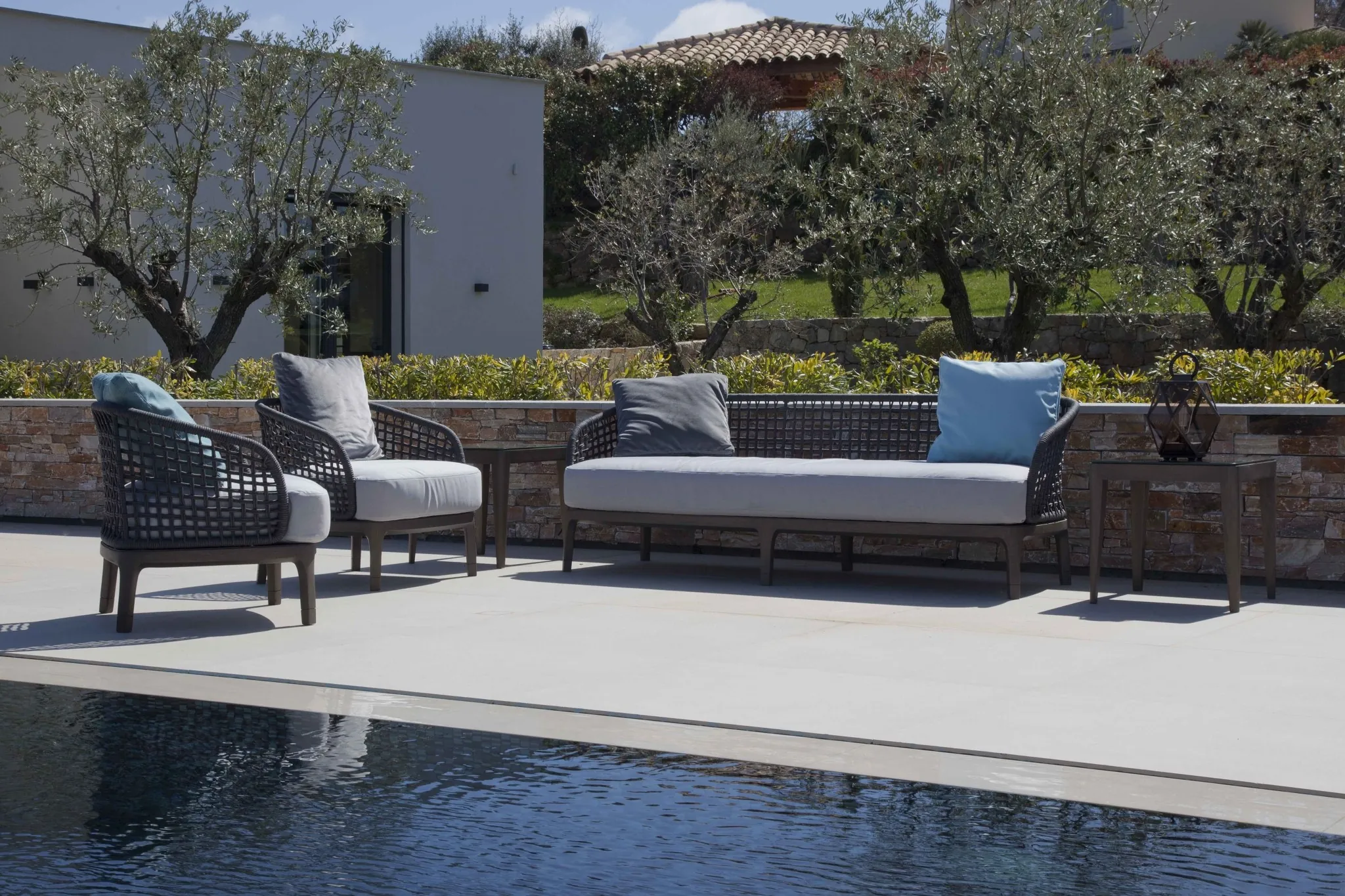
Lungotevere started indoors, with a look back at the 1950s and a leather overcoat you could personalize. The outdoor version keeps the lines and changes the materials. A woven metal structure forms the seat and back. Solid iroko legs carry it. The padding and the cover suit rain and sun, and you pick the fabric from the factory's range of outdoor textiles.
The family covers a chair, an armchair, a chaise longue and a sofa for outside. That range lets you set a dining table and a lounge corner in one language, with the same wood touching the floor in both. See the Lungotevere family.
trastevere, a double Y in iroko
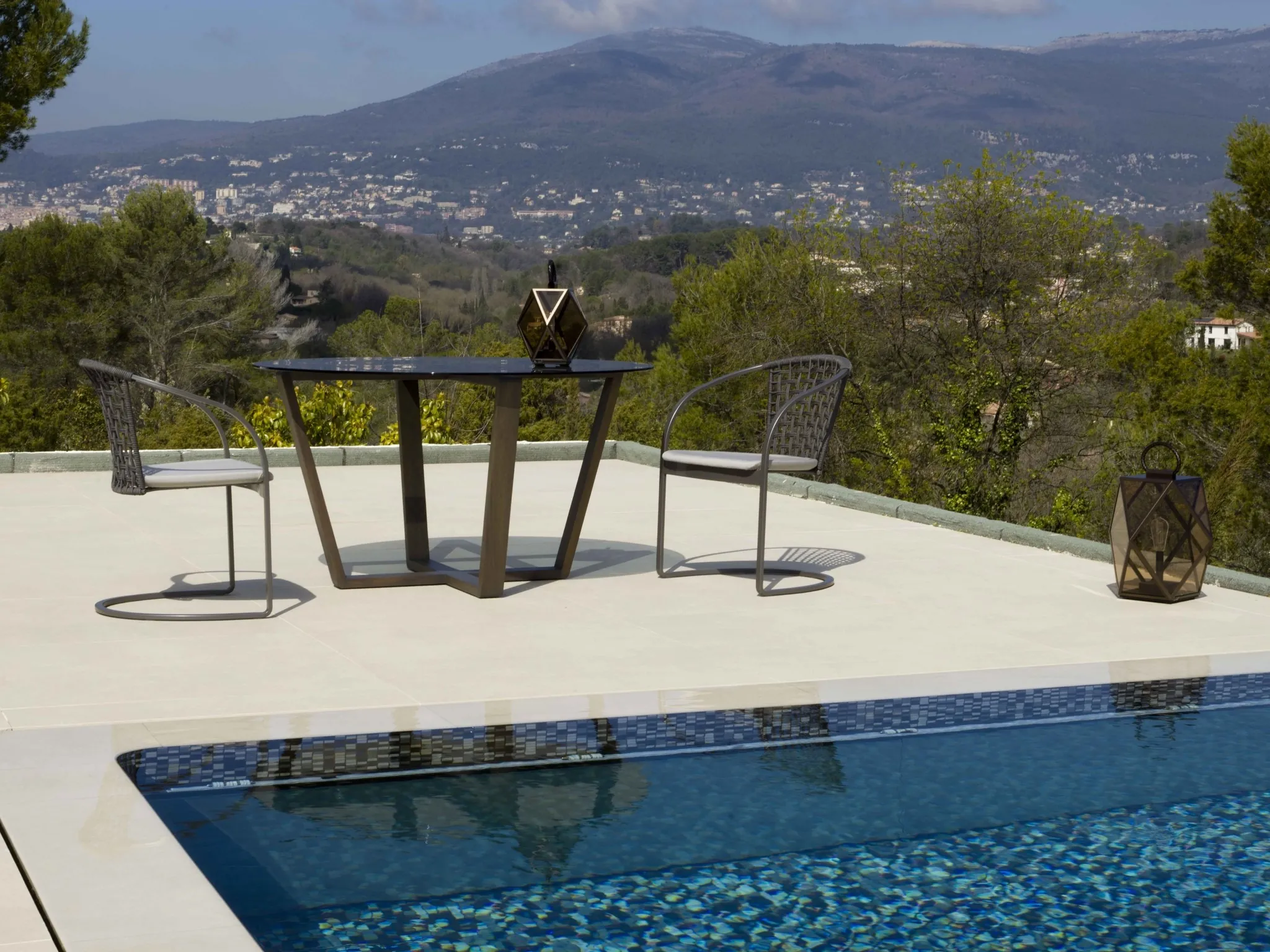
Trastevere began as an indoor table and desk with legs in canaletto walnut or open pore ash. The legs cross to form a double Y that runs the length of the top, and that crossing is the signature of the family. The outdoor table swaps the wood for solid iroko and carries a glass top, which you can order in different colors.
Glass on iroko keeps the base in view. You look through the top and see the crossing legs, which a stone or wooden top would hide. See the Trastevere family.
oil or silver
You get a choice with any hardwood outside. Leave the iroko alone and it turns a silver gray within a few seasons. The change sits on the surface, and the wood beneath stays sound. Many owners like the gray because it matches stone and weathered decking.
Keep the brown and you commit to oil. Clean the wood, let it dry for a day, and brush on an outdoor wood oil at the start of each season. Skip a year and the gray comes back in patches, so pick one route and stay with it.
Either way, lift the legs off standing water. A floor pad under each foot keeps the end grain out of puddles, and end grain drinks water faster than the sides of a leg.
oil or silver
-
01 / 03
Leave it
- What you see
- The wood turns a soft silver gray over the seasons
- What you do
- Wash it with mild soap twice a year
- Suits
- Gardens, relaxed terraces
-
02 / 03
Oil it
- What you see
- The warm brown stays
- What you do
- Clean, let it dry, apply an outdoor wood oil each season
- Suits
- Formal terraces, next to a house with brown timber
-
03 / 03
Protect it
- What you see
- The first color holds longer
- What you do
- A breathable cover when you are away
- Suits
- Seaside homes used a few weeks a year
paperwork for the wood
Wood crossing into the United States brings a declaration. Under the Lacey Act the importer names each timber in the shipment, by Latin name and by the country where it was felled, on form PPQ 505. For a Lungotevere chair or a Trastevere table the form names the iroko. We handle that with the factory's data, and it sits in the quote as a line of its own.
Send us the pieces you are considering, the color of the glass for a Trastevere top, and the fabric for a Lungotevere cushion if you have one in mind. Add the city. The form below goes to a person, and the reply lists the finishes open on each Meroni & Colzani piece, the lead time, and what each piece costs.